
The Academy of Motion Picture Arts and Sciences recognizes achievements in cinematography because visual storytelling shapes how audiences experience every scene. Before a character speaks, viewers often understand whether they are watching an action film, a romance, a science fiction adventure, or a historical drama simply through lighting, color, composition, and atmosphere. Those same visual principles offer valuable lessons for photographers who want to create stronger, more expressive images.
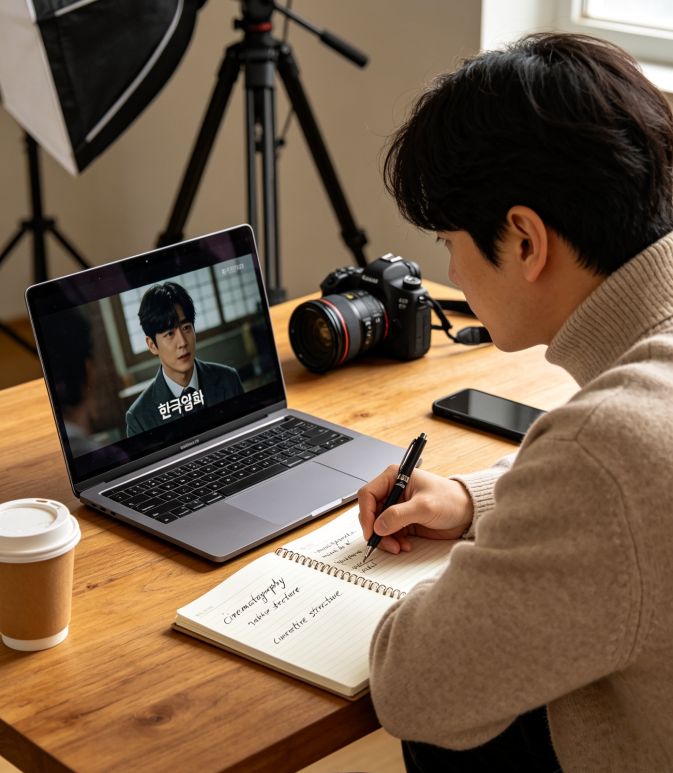
Many photographers study films to better understand visual storytelling. Streaming platforms featuring Korean movies provide useful examples of how mood changes through careful use of light, framing, and color. Rather than copying a particular scene, photographers can observe how directors and cinematographers build emotion through visual choices, then adapt those ideas to portraits, travel photography, commercial work, or personal projects.
Why Visual Language Defines Genre
Every film genre relies on a recognizable visual language. Viewers learn these patterns over time, often without realizing it. Bright colors may suggest optimism, while darker tones often create suspense or uncertainty. Wide landscapes can communicate freedom, whereas close framing encourages intimacy.
The British Film Institute explains that cinematography guides the audience’s emotional response by controlling what is seen and how it is presented. Lighting, camera position, costume, production design, and color work together to establish mood long before dialogue explains the story.
Photographers face a similar challenge. Every decision, from lens selection to editing style, influences how viewers interpret an image. Understanding genre conventions helps photographers become more intentional instead of relying solely on technical settings.
Action Films: Creating Energy and Movement
Action films rarely feel calm. Their visual language encourages excitement through movement, contrast, and dramatic composition. Cameras frequently capture subjects from low or unusual angles, making characters appear larger than life. Diagonal lines and layered compositions create a sense of speed, even in still frames.
Lighting also plays an important role. Strong highlights, deep shadows, headlights, practical lighting, and glowing city streets contribute to an atmosphere filled with tension and urgency. Warm colors such as orange and red often appear alongside darker backgrounds, increasing visual contrast.
Photographers can apply these techniques by experimenting with motion blur instead of freezing every subject. Shooting from lower perspectives, using leading lines, or placing subjects off-center can make an ordinary scene feel much more dynamic. The goal is not to imitate movie scenes exactly, but to create photographs that communicate motion and excitement.
Romance Films: Building Emotion Through Softness
Romantic films often rely on gentle lighting and subtle composition to draw viewers closer to the characters. Soft window light, golden-hour sunlight, and carefully diffused illumination create a welcoming atmosphere that supports emotional storytelling.
Color choices are equally important. Warm neutrals, cream tones, pastel shades, and natural colors help establish comfort and connection. Shallow depth of field keeps attention on facial expressions while allowing distracting backgrounds to disappear.
The International Color Association notes that color strongly influences emotional perception, making thoughtful color selection an important part of visual communication across photography, film, and design.
Portrait photographers can borrow these ideas by focusing on authentic interactions instead of elaborate poses. Small gestures, eye contact, and natural expressions often communicate more than dramatic staging. Soft lighting complements those moments without competing for attention.
Science Fiction: Designing the Future With Light
Science fiction presents a different visual experience. Many productions use clean architecture, geometric compositions, reflective materials, and carefully controlled lighting to suggest advanced technology or unfamiliar worlds.
Cool colors dominate many futuristic scenes. Blue, cyan, violet, and metallic tones frequently appear alongside dark environments illuminated by LED lighting or glowing displays. Symmetry also becomes more common, reinforcing ideas of precision and technology.
Research published by MIT Media Lab has explored how lighting and color influence perception, demonstrating that visual environments significantly affect emotional responses and attention.
Photographers do not need expensive equipment to experiment with this style. Affordable LED lights, reflective surfaces, glass, mirrors, and carefully planned compositions can create futuristic moods. Simple locations often become visually striking once lighting receives greater attention.
Period Films: Letting History Shape the Mood
Historical dramas depend heavily on authenticity. Their visual language usually avoids modern distractions and instead highlights architecture, clothing, textures, and natural light that reflect the period being portrayed.
Candlelight, window illumination, muted earth tones, aged wood, stone walls, and textured fabrics help create believable settings. Rather than pursuing perfect clarity, cinematographers sometimes embrace softer contrast to make scenes feel timeless.
Photographers interested in vintage aesthetics can use similar ideas. Historic neighborhoods, heritage buildings, antique furniture, and natural materials provide strong visual foundations. Editing choices also matter. Slightly muted colors often reinforce the feeling without making photographs appear artificial.
Visual Techniques That Work Across Every Genre
Although every genre has its own style, several principles remain consistent across successful visual storytelling.
Color Should Support the Story
Editing should strengthen the emotion already present in the photograph. Applying dramatic color grading without considering the subject often creates inconsistency. Successful photographers usually develop editing styles that remain recognizable throughout an entire project.
Composition Guides Attention
Leading lines, symmetry, framing, and thoughtful subject placement help viewers understand where to look first. Every element inside the frame contributes to the story, even those that seem unimportant at first glance.
Lighting Creates Emotion
Hard light generates drama, while soft light usually feels more inviting. The direction of light changes how faces, objects, and landscapes appear. Shadows often communicate as much emotion as highlights.
Backgrounds Matter
Every object within the frame influences the final message. Removing unnecessary distractions allows viewers to focus on the intended subject without competing visual information.
Applying Cinematic Thinking to Everyday Photography
Genre-inspired photography does not require elaborate sets or expensive equipment. Instead, it begins with asking a simple question before pressing the shutter: What should the viewer feel?
Portrait sessions become more expressive when lighting matches the subject’s personality. Travel photography becomes more memorable by emphasizing atmosphere instead of simply documenting locations. Commercial photography benefits from visual consistency that reflects a brand’s identity rather than following temporary trends. For photographers interested in learning photography through films, analyzing cinematography frame by frame can provide practical lessons in composition, lighting, and visual storytelling that are easy to adapt to everyday shooting.
Many contemporary Asian films demonstrate how subtle changes in color, pacing, and composition transform familiar locations into emotionally engaging scenes. Studying a variety of international cinema encourages photographers to expand their creative vocabulary without copying individual productions.
Common Mistakes When Borrowing Cinematic Styles
One common mistake is focusing entirely on color grading while ignoring composition and lighting. Cinematic images succeed because every visual element supports the same emotional goal.
Another challenge involves combining conflicting styles within one project. A futuristic lighting setup paired with vintage styling may confuse viewers unless there is a clear creative reason behind the decision.
Finally, photographers sometimes become distracted by technical effects instead of storytelling. Beautiful lighting and dramatic editing have greater impact when they strengthen the subject’s emotional message rather than overpower it.
Conclusion
Film genres communicate emotion through carefully planned visual language. Action films create energy, romances encourage intimacy, science fiction explores atmosphere through technology, and period dramas build authenticity with texture and natural light. These approaches offer practical lessons for photographers seeking stronger storytelling.
Studying international cinema, including acclaimed productions from South Korea and other filmmaking traditions, helps photographers recognize how color, composition, lighting, and texture work together to shape emotion. By understanding these visual principles instead of simply recreating memorable scenes, photographers can develop a style that feels authentic, thoughtful, and uniquely their own.